
Whisker Litter-Robot EVO
Rotating drum
- Days between emptying
- volume not published
- Big-cat fit
- to 19 lb
- Running cost
- no required consumable
- Compact footprint
- 3–19 lb cats
- 1–2 cats
Best for: One or two average-size cats in an apartment
Short answer
Slowly, and with the box switched off at first. Put it where the old box was, keep the old one nearby for a while, add a scoop of used litter, and only turn automatic cleaning on once the cat is using it. Set the longest cycle delay so the machine never moves while the cat is close.
Whisker's advice is to place the Litter-Robot where the old box was, keep both nearby for a short time, and mix a cup of used litter into the new one. It says most cats start within a few days to a week. PetSafe suggests placing the new box beside the old one or leaving it unplugged for the first few weeks. ELS PET suggests leaving it off for a day or two and scattering a few treats around it.
The common thread is to separate two new things, a new object and a new noise. Let the cat accept the box as a box before it ever hears it move.
Most boxes let you lengthen the delay between the cat leaving and the cycle starting; Whisker's goes to 30 minutes and PetSafe's OpenSky to 60. A long delay means a curious cat that comes back to sniff is less likely to be there when the drum turns. Neakasa offers a gradual cleaning mode designed not to startle, and several boxes have a sleep or quiet schedule for night-time.
Stepping up can be its own obstacle. Drums lift the litter bed off the floor, and several makers sell a step or ramp. If an older cat hesitates, the entry step on each box page is the number to check; the lowest published here is 4.8 inches.
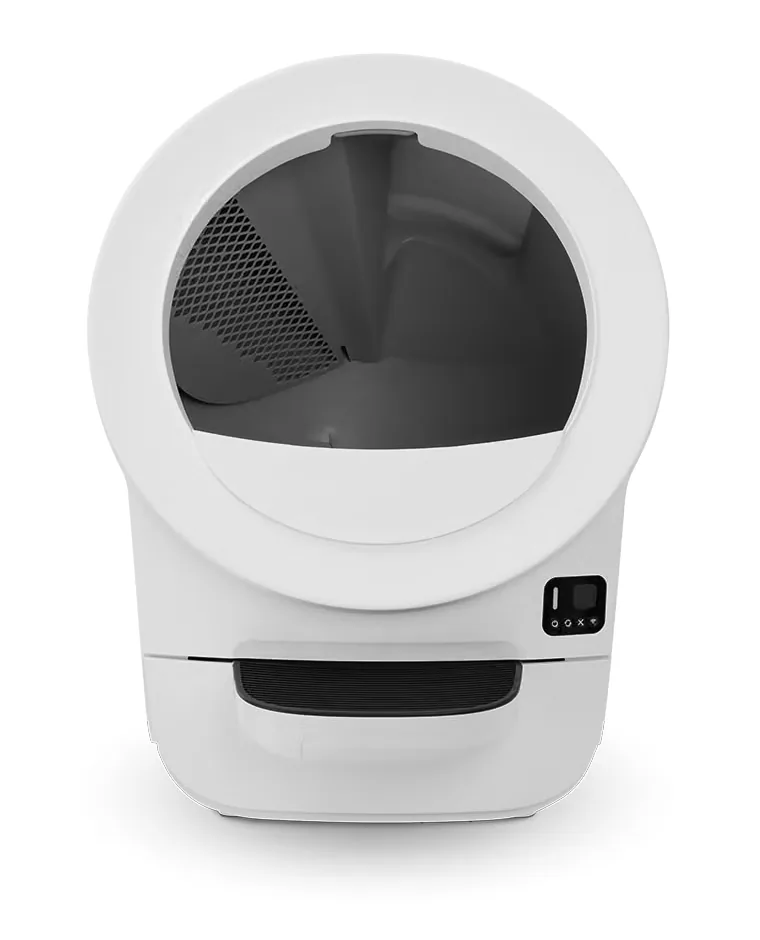
Some cats never take to an enclosed drum, and an open-top or rake design, which looks more like the pan they know, is the usual next step. Check the maker's return window before buying: several offer home trials, and the length of that trial matters more for a cautious cat than almost any specification.

Rotating drum
Best for: One or two average-size cats in an apartment
Open-top
Best for: Large cats in a home that wants the M1 design for less
Rake
Best for: Cats that will only use something that looks like a normal pan
Not until the kitten is heavier than the box's minimum detection weight, and old enough for the maker's own age rule. Published thresholds here run from 2.2 lb to 3.5 lb, which at roughly a pound a month means somewhere between three and six months depending on the box. Until then, run the box in manual or kitten mode and clean it yourself.
Every automatic box waits until a sensor says the cat has left, then separates clumped waste from clean litter and puts it somewhere sealed. Drums turn the whole chamber over a screen; open-tops do it under an open rim; rakes comb a flat bed; crystal-tray boxes rake a disposable tray; flushing boxes wash waste down a drain. The mechanism decides which litter you can use and whether you buy a consumable every month.
Every specification explained, with the real numbers from the catalog behind each one.