How Self-Cleaning Litter Boxes Actually Work

Short answer

Every automatic box waits until a sensor says the cat has left, then separates clumped waste from clean litter and puts it somewhere sealed. Drums turn the whole chamber over a screen; open-tops do it under an open rim; rakes comb a flat bed; crystal-tray boxes rake a disposable tray; flushing boxes wash waste down a drain. The mechanism decides which litter you can use and whether you buy a consumable every month.

The cycle every box shares

A cat walks in, a sensor registers it (usually a scale in the base, sometimes lasers, infrared, radar or a camera), and when the same sensor says the cat has left, a countdown starts. Most boxes let you set that delay; Whisker's goes up to 30 minutes and PetSafe's OpenSky up to an hour, which gives clumps time to harden and nervous cats time to wander off.

Then the box separates waste from litter. Everything after that point is what differs between designs, and it is why two boxes at the same price can be completely different to live with.

Drums and open-tops: turn the litter over a screen

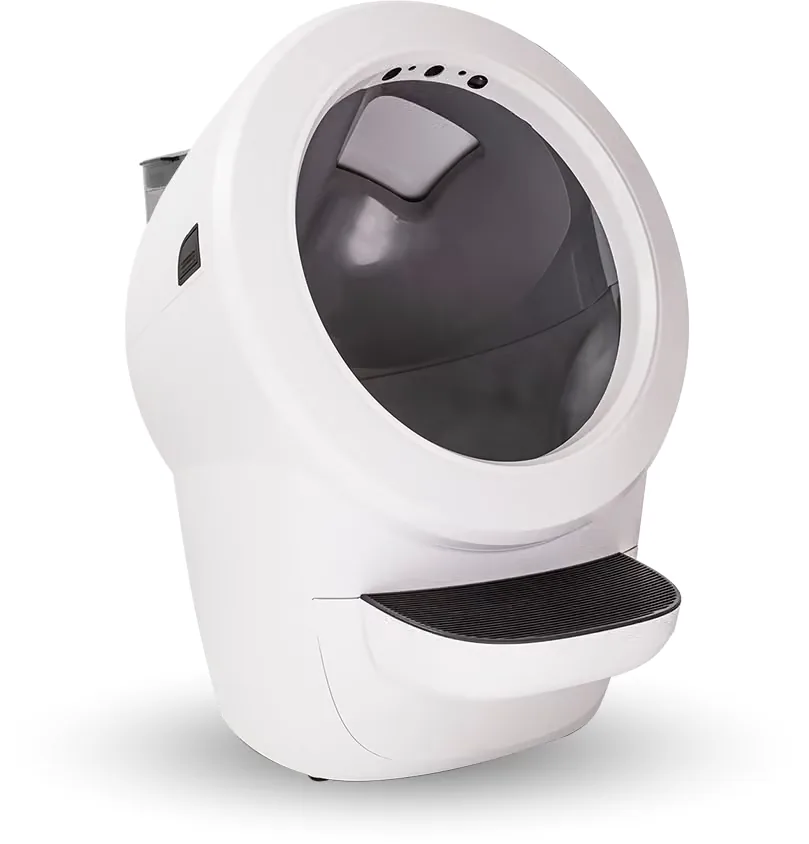
Rotating drums are the most common design here, 21 of the 39. The cat uses an enclosed globe; afterwards the globe rotates so the litter pours through a perforated screen, clumps too big to pass are caught and tipped into a drawer below, and the clean litter levels out as the globe turns back. Drums contain scatter and smell well. They need clumping litter that forms solid clumps bigger than the screen's holes.

Open-top boxes (8 here) work on the same sifting principle but without a hood: the bowl tilts or rotates beneath an open rim. That removes the entry size limit, which suits big cats and cats that refuse covered boxes, at the cost of more litter kicked out.

Rakes and crystal trays: comb a flat bed

A rake box keeps the litter in a flat, low tray and drags a comb across it, pushing clumps into a covered bin at one end. It looks most like an ordinary litter pan, which some cats prefer, but the bins are small; Meowant tells owners of its dual-rake SC03 to empty it every two or three days.

Crystal-tray boxes are PetSafe's ScoopFree idea, and PETKIT's Crystal Duo follows it: a rake sweeps solids across a disposable tray of silica crystals into a covered trap, the crystals absorb urine, and when the tray is spent you lid it and throw it away. There is nothing to scoop or bag, and the boxes are cheap, but the tray is a recurring purchase. 6 boxes here work this way.
Flushing boxes: send it down the drain

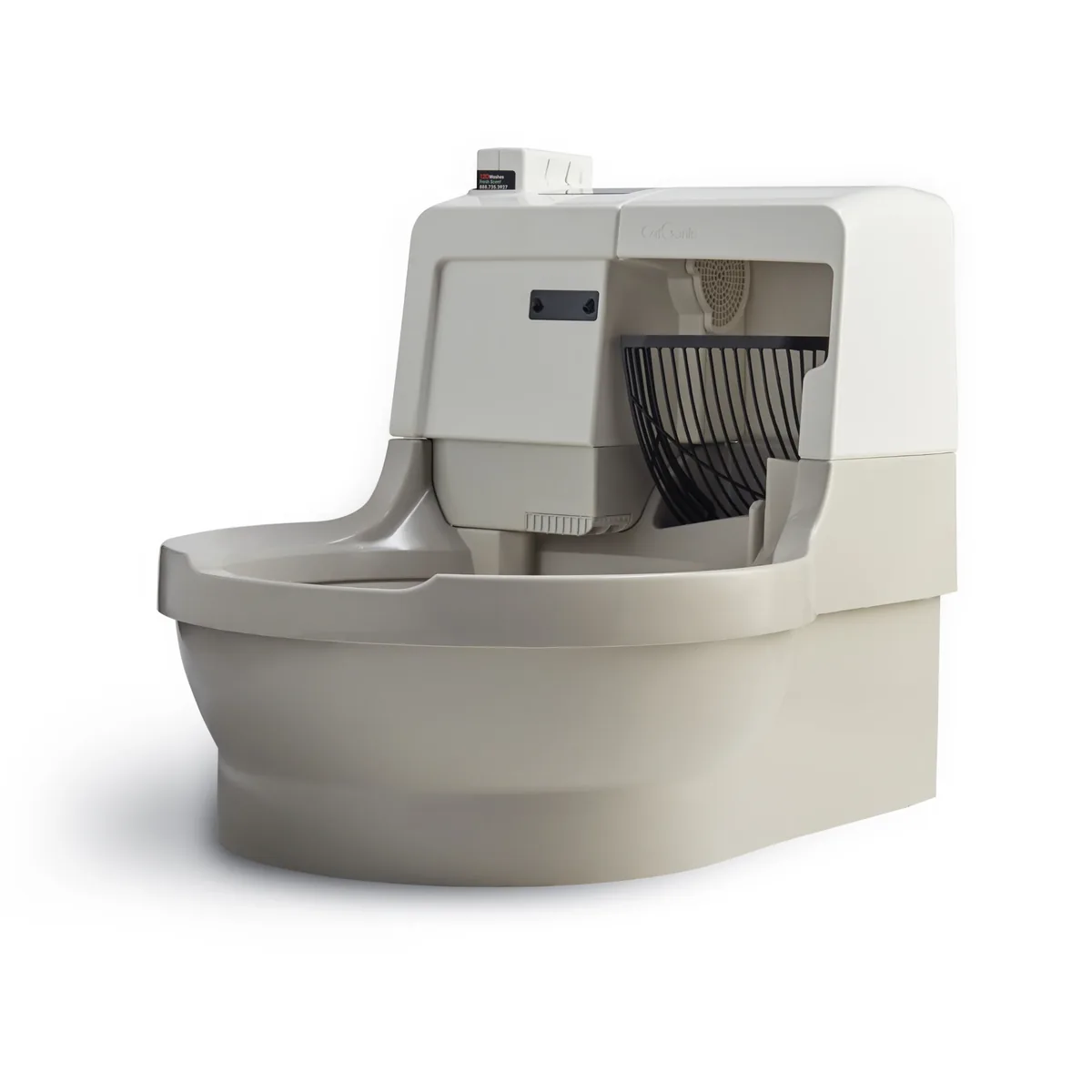
CatGenie's boxes connect to a cold-water line and a drain. After each visit they clear waste out of reusable washable granules (A.I.) or a flushable litter (Whoosh), flush it away, then wash the bowl, and the A.I. dries its granules in place. Nothing is ever emptied. They need a spot near a toilet or laundry drain, and a steady supply of CatGenie's own cleaning cartridges and granules or litter.

Boxes this comes up with

CatGenie A.I. self-cleaning litter box
CatGenie~$499

CatGenie A.I.

Flushing

Automate from 6 months (no weight published)
Days between emptying
drains, no drawer
Big-cat fit
not published
Running cost
consumable, cost not published
  • No drawer to empty
  • Plumbed in
  • Granules only

Best for: A home with a spare spot beside a toilet or laundry drain and no wish to handle waste

Related

  • Which Litter Works in Which Self-Cleaning Box

    Drums, rakes and open-tops need clumping litter; most are designed around clay and many reject pellets. 12 boxes here list tofu as compatible and 12 rule it out. Crystal-tray and flushing boxes take only their maker's own consumable.

  • Kittens, Small Cats and an Automatic Box's Minimum Weight

    Not until the kitten is heavier than the box's minimum detection weight, and old enough for the maker's own age rule. Published thresholds here run from 2.2 lb to 3.5 lb, which at roughly a pound a month means somewhere between three and six months depending on the box. Until then, run the box in manual or kitten mode and clean it yourself.

  • How to read a litter box spec sheet

    Every specification explained, with the real numbers from the catalog behind each one.