Kittens, Small Cats and an Automatic Box's Minimum Weight

Short answer

Not until the kitten is heavier than the box's minimum detection weight, and old enough for the maker's own age rule. Published thresholds here run from 2.2 lb to 3.5 lb, which at roughly a pound a month means somewhere between three and six months depending on the box. Until then, run the box in manual or kitten mode and clean it yourself.

Why the weight matters

An automatic box only cycles when it believes no cat is inside. Most make that decision with a scale: a weight change when the cat steps in, another when it steps out. A kitten below the scale's threshold may never register as a cat at all. At best the box ignores it; at worst it starts a cycle with the kitten inside.

That is why the minimum detectable weight is the first number on every box page here. 27 of the 39 boxes publish one; 20 state a minimum age as well or instead; 5 publish neither, and this site treats those as unsuitable for automatic cleaning around a kitten.

Turning a weight into an age

Vets give owners a rough growth rule for the first several months: a kitten gains about a pound a month, so a four-month-old weighs about four pounds. It is a rule of thumb, and kittens vary, so this site rounds up: a 3.3 lb threshold reads as about four months, a 2.2 lb one as about three.

Where a maker states its own minimum age, the later of the two wins. PetSafe's guides are the clearest example: the OpenSky wants a cat of at least 3 lb and 6 months, and the SmartSpin at least 2.5 lb and 6 months, so both read as six months even though the weights alone would suggest three.

BoxDetects fromMaker's age floorAutomate fromAnti-pinch
Neakasa M1 Lite Plus2.2 lbnot stated~3 monthsyes
Neakasa M1 Plus2.2 lbnot stated~3 monthsyes
PETLIBRO Luma Smart Litter Box2.2 lb6 months~6 monthsyes
ELS PET Orbitie2.5 lbnot stated~3 monthsyes
ELS PET Orbitie Air2.5 lbnot stated~3 monthsnot stated
PetSafe ScoopFree SmartSpin2.5 lb6 months~6 monthsnot stated
Oneisall Ease S12.6 lb6 months~6 monthsnot stated
Meowant MW-SC013 lb4 months~4 monthsnot stated
PetSafe ScoopFree OpenSky3 lb6 months~6 monthsnot stated
Whisker Litter-Robot 43 lbnot stated~3 monthsyes
Whisker Litter-Robot 53 lbnot stated~3 monthsnot stated
Whisker Litter-Robot 5 Pro3 lbnot stated~3 monthsnot stated
Whisker Litter-Robot EVO3 lbnot stated~3 monthsnot stated
CATLINK Scooper Open-X3.3 lb6 months~6 monthsyes
CATLINK Scooper Pro Ultra3.3 lbnot stated~4 monthsyes
Meowant MW-SC023.3 lb4 months~4 monthsyes
Meowant MW-SC09 Plus3.3 lb4 months~4 monthsyes
Meowant MW-SC103.3 lbnot stated~4 monthsyes
PETKIT Purobot Crystal Duo3.3 lb6 months~6 monthsnot stated
PETKIT Purobot Max 33.3 lb6 months~6 monthsyes
PETKIT Purobot Max Pro 23.3 lbnot stated~4 monthsyes
PETKIT Purobot Ultra3.3 lb6 months~6 monthsyes
PetSnowy SNOW+3.3 lbnot stated~4 monthsnot stated
CATLINK Scooper Luxury Pro-X3.5 lb3 months~4 monthsyes
CATLINK Scooper SE3.5 lbnot stated~4 monthsyes
CATLINK Scooper SE Lite3.5 lbnot stated~4 monthsyes
CATLINK Scooper Young Pro-X3.5 lb3 months~4 monthsyes

What to do until then

Every maker that addresses it says the same thing in different words: switch automatic cleaning off. Whisker calls it a supervised semi-automatic mode, PETKIT and Neakasa call it Kitten Mode or Kitten Protection Mode, PetSafe says to leave the box unplugged and scoop by hand. Trigger cycles yourself when the kitten is out of the room.

The same logic applies to a small adult cat that sits near a threshold, and to any cat that is losing weight. A drop below the detection weight is exactly the case the sensor is not designed for.

Weight is not the only protection. Some boxes carry a sensor that stops and reverses the moving part if something is in the way (Whisker's LR4 and CATLINK's Pro-X family, for example), and drums built on an incomplete gear (PETKIT, and CATLINK's SE and Open-X) cannot rotate their entry shut. Neither replaces the weight threshold; both reduce what depends on it.
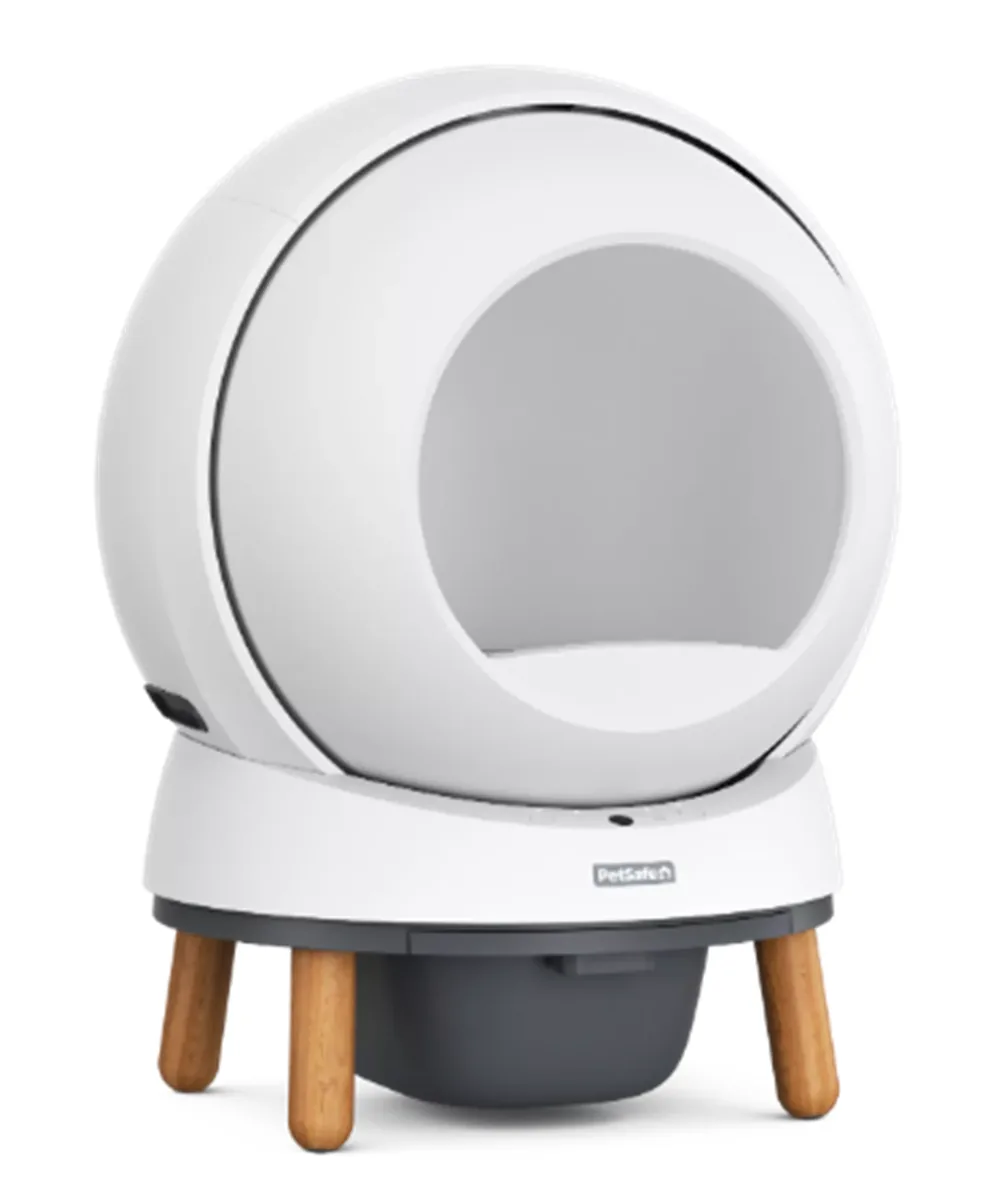
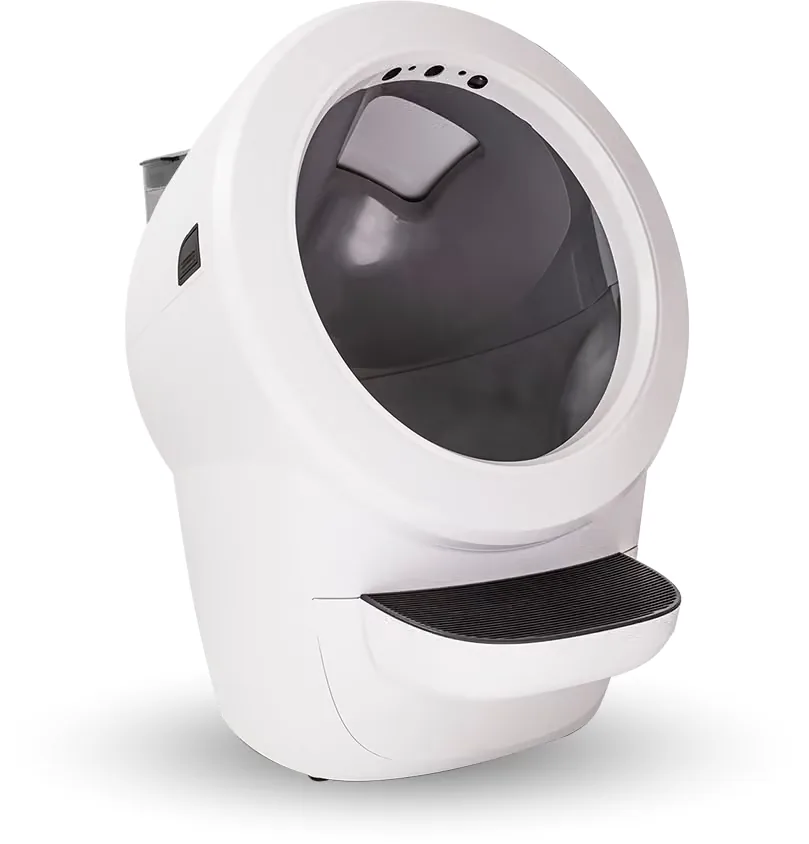
Boxes this comes up with

Related

  • How Self-Cleaning Litter Boxes Actually Work

    Every automatic box waits until a sensor says the cat has left, then separates clumped waste from clean litter and puts it somewhere sealed. Drums turn the whole chamber over a screen; open-tops do it under an open rim; rakes comb a flat bed; crystal-tray boxes rake a disposable tray; flushing boxes wash waste down a drain. The mechanism decides which litter you can use and whether you buy a consumable every month.

  • Getting a Suspicious Cat to Use an Automatic Litter Box

    Slowly, and with the box switched off at first. Put it where the old box was, keep the old one nearby for a while, add a scoop of used litter, and only turn automatic cleaning on once the cat is using it. Set the longest cycle delay so the machine never moves while the cat is close.

  • How to read a litter box spec sheet

    Every specification explained, with the real numbers from the catalog behind each one.